Category Archives: databases

From Relational Databases to Models: Reverse engineering with ScheMoL

esquimal

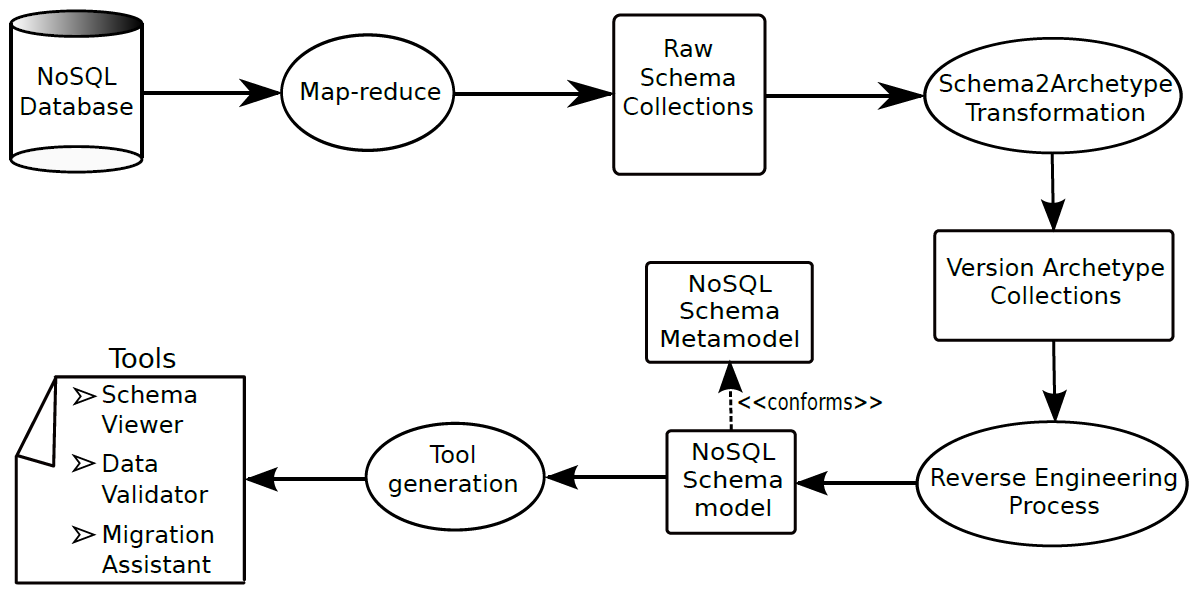
Javier Cánovas talks today about ScheMoL, his approach (co-authored with Oscar Díaz, Gorka Puente and Jesús García Molina ) for the reverse engineering of relational databases. Note that, ulike other approaches, the goal is not to get a model representing the database schema but to transform the database data into a model (conforming to a

No Java API to import / export sql files (really?)

mysqljava

I was looking for a way to import and export sql files to/from a mysql database from within a Java application (i.e. I want to let users upload a .sql file in the application and import this file, similarly I want them to be able to create a dump of the database they uploaded before)

Exhaustive list of data modeling tools

dba_400_home

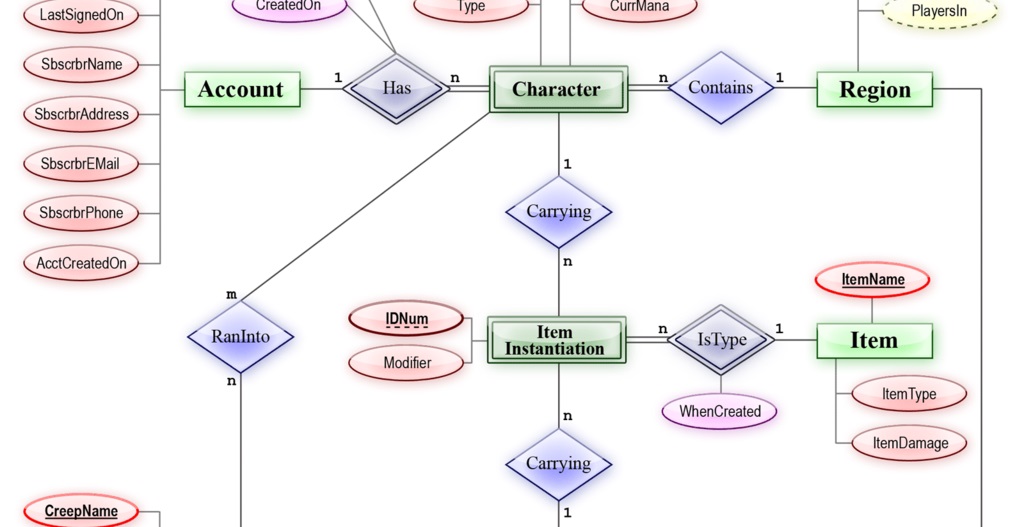
I use UML for data(base) modeling (see this post for a discussion on the suitability of UML for this task) but many many people (specially with a strong database babckground) still prefers to use the ER language or any of its variants for data modeling. If you are one of them, I’m pretty sure you’ll

The only thing I miss from the ER language

ER

The Entity-relationship was (well, still is in the database domain) a popular modeling language to define the (static) conceptual schema of your system. UML class diagrams (with a little bit of help from OCL) can be regarded as a superset of the ER language, which explains why ER is slowly disappearing (e.g. some years ago,

Modeling and generating spatial databases with MOSKitt

MOSKitt , a free modeling platform FOR Eclipse (see this detailed interview TO know MORE about it AND the people behind the project) can now be used TO model AND generate spatial databases.

A new video for UMLtoDB – the online SQL code generation service

Now you can see a video OF the UMLtoDB online generation service showing how easy IS TO generate your database SCHEMA FROM a simple UML model (ONLY a class diagram IS needed; forget about USING stereotypes OR ad hoc UML extensions).

See the video below:

NO two programmers use the same notation (experiment)

Zuzel Vera Pacheco, a Master Student AT the University OF Toronto under the supervision OF Greg Wilson has been working ON the Back-annotation OF DATA models AT run-TIME . FOR a short description OF her project see also this presentation ON slideshare.

Complaint about my code-generation strategy to implement many-to-many associations in relational databases

I got a complaint about the translation of many-to-many UML associations to SQL tables in my UMLtoSQL online service .

More specifically, the complaint was that in the translation of this UML class diagram:

Example

UML class diagrams easier to understand than ER diagrams

Greg Wilson pointed me to the paper A. De Lucia, C. Gravino, R. Oliveto, G. Tortora, An Experimental Comparison of ER and UML Class Diagrams for Data Modelling, Empirical Software Engineering (2010) 15:455–492 (if you cannot access the paper, you may try directly contacting the authors).

The paper presents the results of three sets of controlled experiments aimed at
analyzing whether UML class diagrams are more comprehensible than ER diagrams
during data models maintenance.

VoltDB: Is a database without foreign keys useful enough for you?

IN the previous post we have announced the availability OF our UML TO VoltDB TRANSLATION service . However, if you try it, you may GET the feeling that the generated SQL script looks incomplete.

Powered by WordPress